
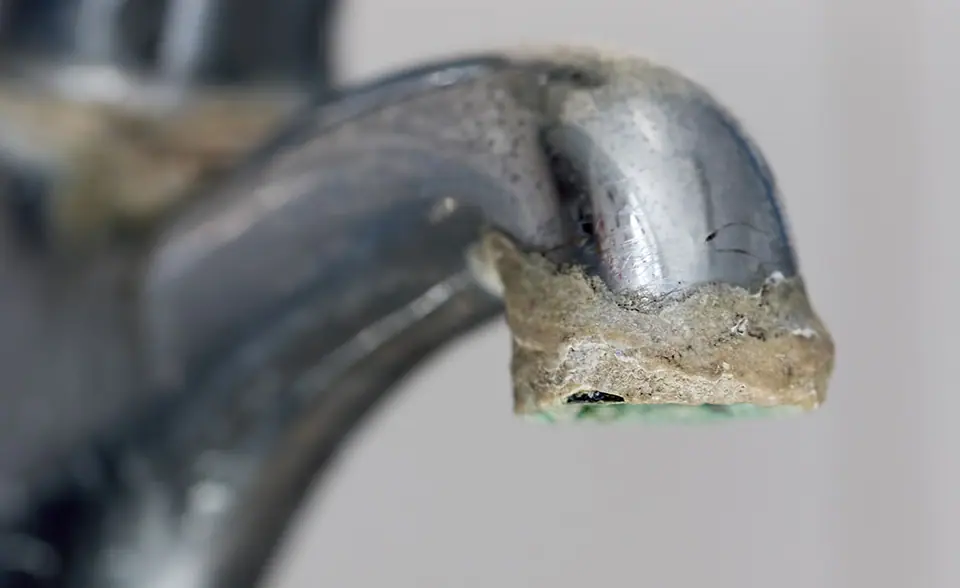
Hard water is one of the quietest problems a Chicago-area home can have. It will not flood a basement or leave you without heat, but year after year it coats water heaters, fixtures, and appliances with scale that slowly wears them down. A water softener is the standard fix — and choosing the right one comes down to understanding how the systems work, how they are sized, and what actually drives the cost.
This guide walks through the main types of water treatment systems King installs, how softening protects your plumbing, and how to match a system to your household. Wherever water hardness varies — and around here it varies a lot — the right starting point is a simple test.
Hard water — and why Chicagoland has it
Hard water simply means water carrying a high level of dissolved minerals, mainly calcium and magnesium. As groundwater and surface water move through limestone, dolomite, and similar rock, they pick up these minerals. That is exactly what happens across the Great Lakes basin, which is why plumbing in this region deals with hard water so often.
Chicago draws nearly all of its drinking water from Lake Michigan, and that water arrives at the tap treated but not softened. City water averages around 8 grains per gallon — moderately hard to hard on standard scales. Many suburban and Northwest Indiana homes are harder still, especially those on well water or limestone-aquifer sources; some outlying Illinois communities run well into the teens. The minerals are not a health risk, but they are hard on your pipes.
How hardness is measured
Water hardness is measured in grains per gallon (GPG) or milligrams per liter (mg/L), where one grain per gallon equals about 17.1 parts per million. The Water Quality Association scale is the common reference point:
Once hardness climbs past about 7 GPG, scale starts to matter. You can learn how to remove scale buildup from your pipes, but preventing it at the water’s entry point is far easier than clearing it once fixtures and lines are already coated.
How a water softener actually works
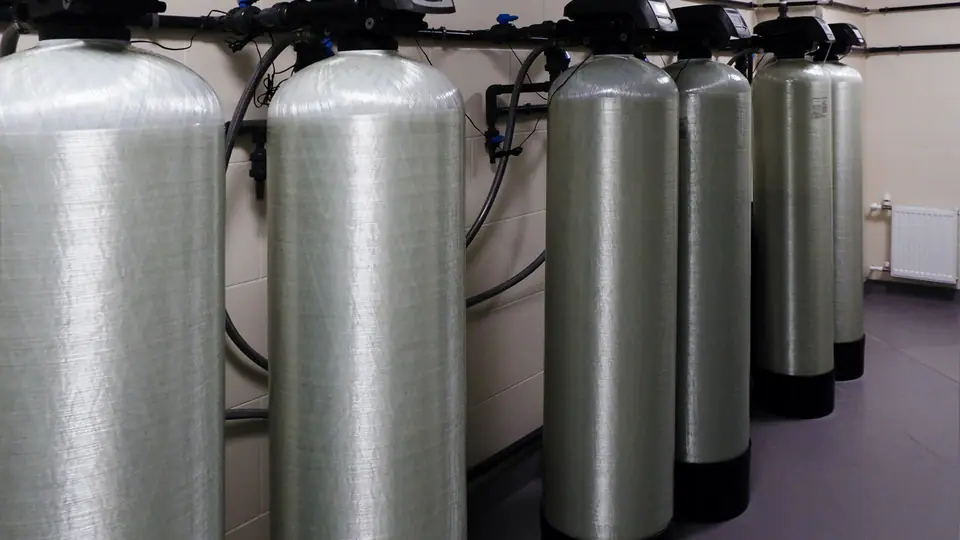
A softener does not filter or purify water. It swaps the hardness minerals for sodium through a process called ion exchange. A typical system has two parts: a tall resin tank and a shorter brine tank that holds salt.
The resin tank is packed with thousands of small beads that carry a negative charge and are coated with sodium ions. As hard water flows through, the more strongly charged calcium and magnesium ions are pulled onto the beads, and sodium is released into the water in their place. Over time the beads fill up with hardness minerals and need to be recharged.
That recharge is the regeneration cycle. Concentrated brine from the salt tank flushes through the resin, stripping off the accumulated calcium and magnesium and sending them down the drain, which refreshes the beads for the next round. Regeneration usually runs at night and, depending on the system, can use roughly 25 gallons of water per cycle.
The unit installs where water first enters the home, just past the main shutoff and before the line branches to your fixtures and water heater. Most setups bypass outdoor spigots so softened, slightly salted water is not sent to lawns and gardens.
The benefits of soft water
The payoff from softening shows up gradually, across your plumbing and your daily routine.
Less scale on appliances
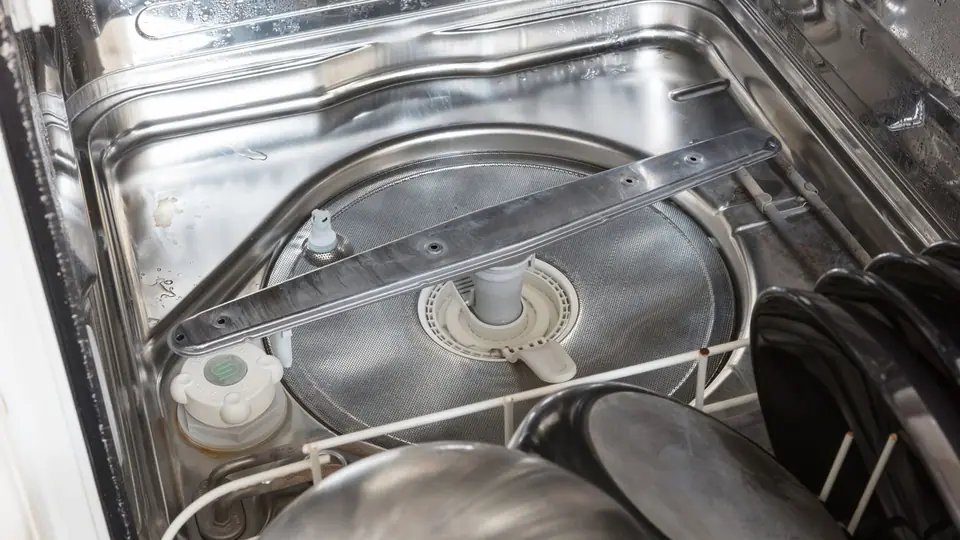
Soft water keeps mineral scale off the heating elements in water heaters, dishwashers, and washing machines, which helps them run efficiently and last longer. It is one reason a softener is often paired with a tankless water heater.
Steadier water pressure
Because scale narrows pipe interiors over time, keeping it from forming helps maintain flow. If you are already fighting low water pressure, hardness may be part of the story.
Better cleaning, less soap
Soap lathers and rinses far better in soft water, so you tend to use noticeably less detergent, and glassware and laundry come out cleaner without a mineral film.
Easier on skin and hair
Hard water leaves a mineral residue that can dry skin and dull hair. Soft water rinses cleanly, which many people notice most in the shower.
Soft water can also trim energy use a little: when scale is not insulating the heating element, appliances heat water more efficiently. It also protects vulnerable parts like the anode rod in your water heater from working overtime against mineral corrosion.
Types of water softener systems
King installs the full range — salt-based softeners, salt-free conditioners, dual-tank systems, magnetic units, and combination softener-filter systems — and the right one depends on your hardness level, household size, and how much maintenance you want.
Salt-based softeners Most effective
The most common and the most thorough at removing hardness. They use ion exchange with a resin and brine tank and genuinely soften the water. In exchange, they need periodic salt refills and occasional resin care. This is the go-to for genuinely hard water.
Salt-free conditioners Low maintenance
These do not remove minerals; they use template-assisted crystallization to change the mineral structure so it is less likely to form scale. No salt, no electricity, minimal upkeep — best for moderately hard water, roughly under 15 GPG. You keep the minerals, so you will not get the true soft-water feel.
Dual-tank systems Continuous supply
Two resin tanks alternate, so one softens while the other regenerates and you never lose soft water mid-cycle. A strong fit for large households, high water use, or homes on well water — but they are larger and cost more.
Magnetic / electronic units Debated
Compact devices that clamp onto the pipe and claim to neutralize minerals electromagnetically without cutting into the line. They take little space, but their effectiveness is debated and results vary, especially on very hard water.
Some homes want more than softening. Combination systems pair a softener with filtration to address hardness plus contaminants like chlorine and sediment in one unit — a good option when taste and odor are also a concern. King’s team can walk you through the water treatment options that make sense for your water.
What drives the cost of a softener
Prices for softeners move around with capacity, features, and the home itself, so rather than quote figures that go stale, here is what actually moves the number — and you can get a straight quote from King for your situation.
The system itself
Capacity and type set the baseline. Higher-capacity units for larger or harder-water homes cost more than compact ones. Salt-free conditioners, dual-tank systems, and magnetic units all sit in different ranges. Component quality matters too: a programmable, metered control valve and durable resin cost more up front than a basic timer-based unit but tend to run more efficiently and last longer. Third-party certification adds cost as well.
Installation
Labor depends on your plumbing. A home already pre-plumbed for a softener near the main line with good drainage is straightforward. Older homes, tight mechanical rooms, or setups needing pipe rerouting, added drainage, or electrical work take more time. Local permits and inspections can factor in too. Our plumbing team handles the connection so the unit is set up correctly and to code.
Ongoing upkeep
Salt-based systems need regular salt, and how much depends on your hardness and household size — harder water means more frequent refills. Salt-free systems skip the salt but call for periodic media replacement. Routine service on either type helps head off bigger repairs down the road.
Rule of Thumb
Sizing and hardness drive both the equipment and the running cost — so a water test and a home assessment are worth more than any online price range. Ask King for a quote tailored to your water.
On long-term value: no one can promise a softener will recoup its cost on a set timeline or deliver a specific dollar figure in savings. What a quality system reliably does is reduce scale-related wear on your plumbing and appliances, cut down on soap and detergent use, and help hot-water equipment run more efficiently — benefits that add up quietly over a system’s life.
How to size and choose your system
First, test your water
Everything starts with knowing your hardness. Options, from quickest to most thorough:
Your utility report
Chicago and most municipalities publish an annual Consumer Confidence Report with hardness figures. It is free and a good baseline for city water.
Home test strips
Dip a strip and match the color to the chart for an instant read. Handy for a quick check, especially on well water that is not covered by a city report.
Professional lab test
The most accurate route, and it also flags iron and other contaminants that change which system you should choose.
Well water? Test first
Well and outlying-aquifer water can be far harder than Lake Michigan supply and often carries iron. Always test before sizing a system.
Then, size it correctly
Sizing is straightforward math. Estimate daily use at about 75 gallons per person, multiply by your hardness in GPG, and you have the grains your softener must remove each day. For a four-person Chicago home on roughly 8-grain water: 4 people × 75 gallons = 300 gallons, × 8 GPG = about 2,400 grains a day. Multiply by seven for the weekly figure, and a common 32,000-grain unit regenerating about weekly fits comfortably.
Getting the size right matters. An undersized system regenerates too often and wastes salt and water; an oversized one can let water channel through the resin unevenly rather than softening it thoroughly. When in doubt, size to your tested hardness, not a guess.
Installation and maintenance
Installation basics
A softener goes in near the main water entry, ahead of the water heater, with a few practical requirements a professional will handle:
- Installed just past the main shutoff, before the line branches to fixtures
- A dedicated grounded 110V outlet within reach for the control valve
- Clearance around the unit for service, and an ambient temperature that stays above freezing
- A drain connection with a proper air gap to prevent backflow into your water
If you are mapping out where everything sits, our guide to your home’s plumbing system is a useful primer.
Routine maintenance
Salt-based systems are low-effort but not no-effort:
- Check salt monthly and keep the brine tank between one-quarter and one-half full.
- Break up salt bridges — hard crusts that form above the water line — if regeneration seems off.
- Clean the brine tank about once a year, and use a resin cleaner periodically if you have iron in your water.
Tip: If you would rather not track this yourself, ongoing plumbing maintenance can be bundled into the King Royal Treatment Plan so a technician keeps an eye on your system alongside the rest of your home.
When to replace your softener
With reasonable maintenance, a quality softener typically serves a home for well over a decade.
Signs it is time to replace
- Hard-water symptoms returning — spotty dishes, dry skin, poor lather — despite adequate salt
- The unit regenerating constantly, or seemingly never
- Frequent breakdowns or repairs, especially as the system nears the end of its expected life
A good rule: once repair costs approach half the price of a new system, replacement is usually the smarter move.