
Rodding cuts through the blockage. Jetting scours the pipe. That is the whole distinction in one line, and most of the confusion around these two services comes from the fact that both restore flow — so from inside your house, they look like the same fix.
They are not. One clears a path so water moves again. The other removes the accumulated material that narrowed the pipe in the first place. Which you need depends on whether you are dealing with a one-time obstruction or a line that has been closing up for years. This guide is about the main sewer line specifically. If your problem is a single slow sink, tub, or shower, our page on hydro-jetting vs. snaking covers fixture drains in detail.
Two Tools, Two Different Jobs
Rodding feeds a powered steel cable into the sewer line from a cleanout. A cutting head on the end chews through the obstruction or hooks it so the plumber can draw it back. It is mechanical, direct, and it is what clears the overwhelming majority of sewer stoppages on the first visit.
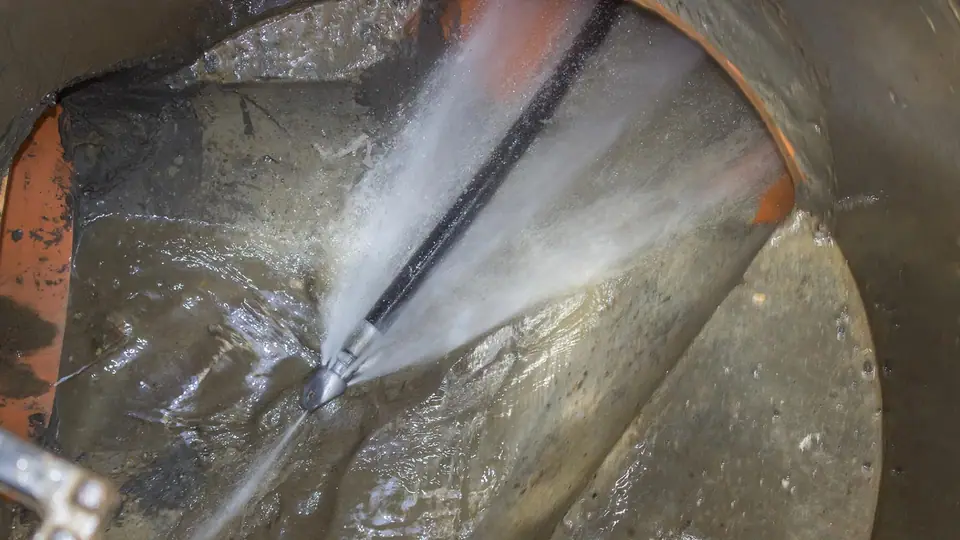
Hydro-jetting runs a hose with a specialized nozzle down the same line and delivers water at high pressure. Forward jets cut the blockage; rear-facing jets propel the hose forward and flush debris back toward the cleanout. The result is a pipe scoured toward its original inside diameter rather than a channel bored through years of accumulation.
The distinction that matters: rodding restores flow through what is in the pipe. Jetting removes what is on the pipe.
Why Chicago Says "Rodding"
If you grew up here, you call it rodding. If you moved from somewhere else, you probably call it snaking, and you may have spent a confusing phone call or two figuring out that everyone means the same thing.
The terminology is regional. "Sewer rodding" is the standard phrase across Chicago and the surrounding suburbs, dating to when the equipment genuinely was sectional rods coupled together and pushed down the line by hand. The rods became continuous powered cable decades ago, but the word stuck.
Worth knowing when you are comparing quotes: a company advertising sewer rodding and a company advertising sewer snaking are offering the same service. What actually differs between quotes is the equipment size, whether the price includes a camera, and how far down the line the work is guaranteed to reach.
Main Line or Fixture Drain? Start Here
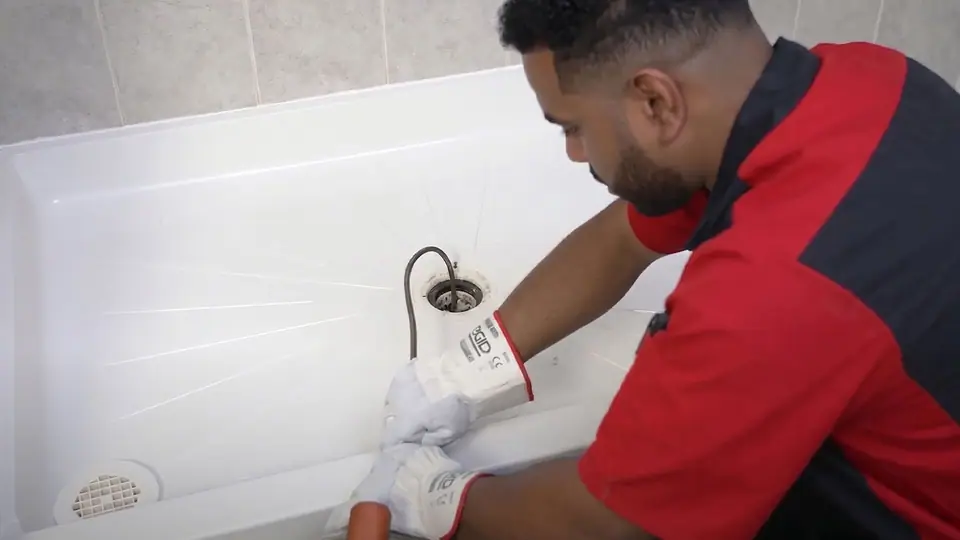
Before choosing a method, establish which problem you have. The symptoms are genuinely different, and getting this wrong wastes a service call.
One fixture is slow or stopped
A single sink, tub, or toilet backing up while everything else drains normally is a fixture problem. It is handled at the fixture, not at the main.
Multiple fixtures at once
Toilet gurgling when the washer drains, tub filling when a sink runs, basement floor drain backing up — that is the main line, and it is urgent.
The lowest drain in the house is the tell. Wastewater that cannot exit finds the lowest available opening, which in most homes here is a basement floor drain or a basement shower. If sewage is appearing there, stop running water immediately.
!
Stop running water before you do anything else
Every gallon that goes down a drain during a main line backup has nowhere to go but back up through the lowest fixture in the house. No laundry, no dishwasher, minimal toilet use until the line is cleared. This single step prevents most of the property damage a backup causes.
What a Sewer Rodding Call Looks Like
The plumber locates and opens the cleanout — typically in the basement, a crawlspace, or outside near the foundation. The powered cable goes in with a cutting head sized to the pipe, and the machine feeds it toward the blockage.
When the head reaches the obstruction, it cuts. You usually know the moment flow returns, because water that has been standing drains audibly. The plumber runs water to confirm the line is open and pulls back whatever came loose.
Rodding is the right first call when: this is a first-time backup, the line has no known history, the house is older with unknown pipe condition, or you need flow restored right now and diagnosis can follow. It is faster, gentler on questionable pipe, and it is enough far more often than not.
Its limitation: a cable opens a channel. It does not remove the grease, scale, and sludge coating the pipe wall, so if buildup caused the blockage, the buildup is still there when the plumber leaves.
What a Hydro-Jetting Call Looks Like
Jetting starts with an assessment, because pressure applied to a compromised line makes a bad situation worse. On a main line that usually means putting a camera down first to see what condition the pipe is actually in.
If the line checks out, the jetting hose goes in through the cleanout. The nozzle works down the line while rear-facing jets flush loosened material back toward the opening. It takes longer than rodding, and the pipe it leaves behind is meaningfully cleaner.
Jetting is the right call when: the same line has backed up repeatedly, a kitchen line is heavy with grease, the pipe carries years of scale, or a previous rodding restored flow that closed up again within months. Our post on scale buildup in pipes explains why that accumulation matters.
Its limitation: pipe condition governs, absolutely. A cracked, badly corroded, or collapsing line is not a jetting candidate, and no amount of wanting it to be changes that.
Roots: The Reason Most Sewers Get Rodded Here
In older Chicago neighborhoods and south suburbs — the parkway maples and elms, the clay tile laterals, the century-old housing stock — roots are behind more repeat sewer calls than everything else combined.
The sequence is consistent. A joint loosens or the pipe cracks slightly. Moisture and warm vapor escape into the surrounding soil. Roots grow toward that moisture, and a root fine enough to pass through a hairline opening reaches the inside of the pipe, where there is constant water. Then it thickens. Eventually it forms a mass that catches everything moving past it.
Both methods clear roots. Rodding cuts them out mechanically. Jetting cuts and flushes, generally leaving less behind. Neither repairs the opening the roots came through, which is why root intrusion is a recurring appointment rather than a one-time fix until the pipe itself is addressed. Our guide to sewer line problems, causes, and prevention covers the structural side, and what causes sewer line backups covers the rest of the common culprits.
Clay, Cast Iron, and Why Material Decides the Method
What your sewer line is made of is often the deciding factor, and it correlates closely with when the house was built.
Vitrified clay tile
Pre-1950s common
Laid in short sections with joints every few feet. Every joint is a potential root entry, and the material is brittle. Assessment before jetting is not optional here.
Cast iron
Mid-century
Durable but corrodes from the inside out. Scale narrows the diameter over decades. Jetting is often genuinely useful on sound cast iron and genuinely risky on a section that has thinned.
PVC or ABS
Newer construction
Smooth-walled, fewer joints, tolerant of both methods. Blockages here are usually about what went down the drain rather than the pipe failing.
If you do not know what you have, that is normal — and it is exactly what a camera answers. Homes with a mix of materials from partial replacements over the decades are common in this area. Our guide to plumbing in older homes covers what else tends to come with that territory.
Side by Side on a Main Line
Rodding vs. jetting at a glance
- What it does: rodding cuts a channel through the blockage · jetting scours the pipe wall
- Speed: rodding is faster, often a single visit · jetting takes longer and may need assessment first
- Grease: rodding cuts through and leaves the rest · jetting flushes it out
- Roots: both clear intrusion · neither repairs the crack they entered through
- Fragile or unknown pipe: rodding is the safer first move · jetting requires assessment
- How long it holds: jetting generally buys more time when buildup is the underlying cause
- Emergency backup: rodding restores flow fastest when the basement is at risk
How King Chooses — and When We Say No
Our plumbers carry both. The choice is made at your house, after looking at the line, not over the phone.
A first backup with no history gets rodded, because it is faster and it is usually enough. A third call on the same line in a year shifts the conversation to jetting, since clearing it again will not change the pattern. A kitchen line thick with grease is a jetting recommendation. An older home where nobody knows the pipe condition gets assessed before anything high-pressure goes down it.
And sometimes the honest answer is that jetting is not appropriate for your line at all. If the pipe cannot take it, we say so rather than taking the larger ticket and hoping. That is the same standard we apply to every inspection we do.
Skip the store-bought chemical drain cleaner
Chemical cleaners are corrosive and rarely resolve a real sewer blockage — the product sits in standing water above the clog doing damage to the pipe instead. It also creates a hazard for whoever opens the line afterward. If a drain is stopped, mechanical clearing or water pressure is the answer.
What Clearing Cannot Fix
Being straight about this matters, because it is where a lot of homeowners get sold things they did not need.
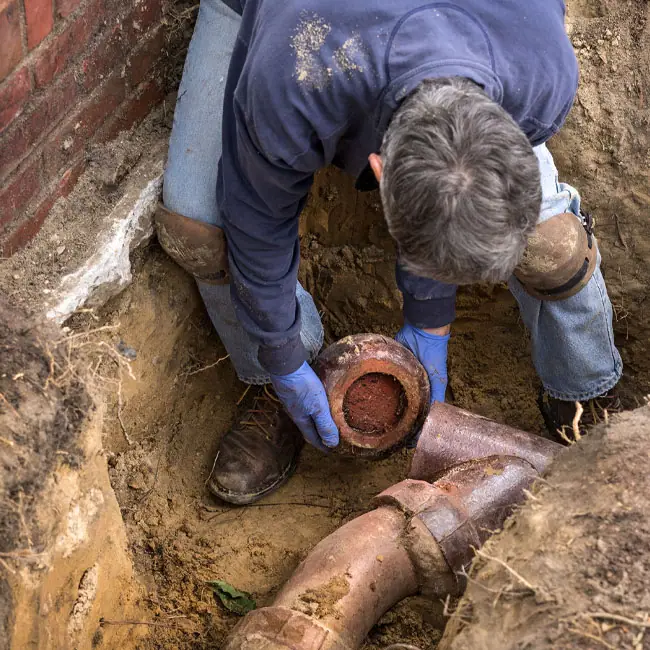
King clears, rods, and jets drain and sewer lines, and we respond to backups around the clock. What clearing a line does not do is repair it. A pipe that has cracked, separated at a joint, corroded through, developed a belly where waste settles, or partially collapsed has a structural problem, and rodding or jetting will restore flow temporarily without addressing any of it.
The signals that you are dealing with structure rather than blockage: backups returning on a predictable schedule, multiple clearings in a single year, soggy or unusually green patches in the yard along the line’s path, or sewer odor outdoors. When that is the picture, the useful next step is seeing the pipe — not clearing it again and hoping for a different outcome.
Keeping the Line Clear Between Visits
Most of what reaches the sewer never had to
Grease is the leading cause of the buildup that eventually needs jetting, and it enters as a liquid and hardens where the pipe is coldest. Let it cool in a can and throw it out.
Beyond grease: know what belongs in a garbage disposal and what does not. Flush only waste and toilet paper — wipes labeled flushable do not break down and are a routine cause of main line stoppages. Use drain screens on showers and tubs. If you have mature trees near the lateral’s path, treat any slow-drain pattern as an early warning rather than an annoyance.
If backups follow heavy rain specifically, the issue may not be your lateral at all. Look at backflow prevention and confirm your sump pump is working — a failed pump during a storm produces symptoms that resemble a sewer backup. Our sump pump overview covers how to test one.
Current offers are on our coupons page. Not sure we reach you? Check service areas. See what neighbors say on our reviews page, or learn more about King, family-owned since 1968 — and see our full range of Chicago plumbing services and plumbing repair.