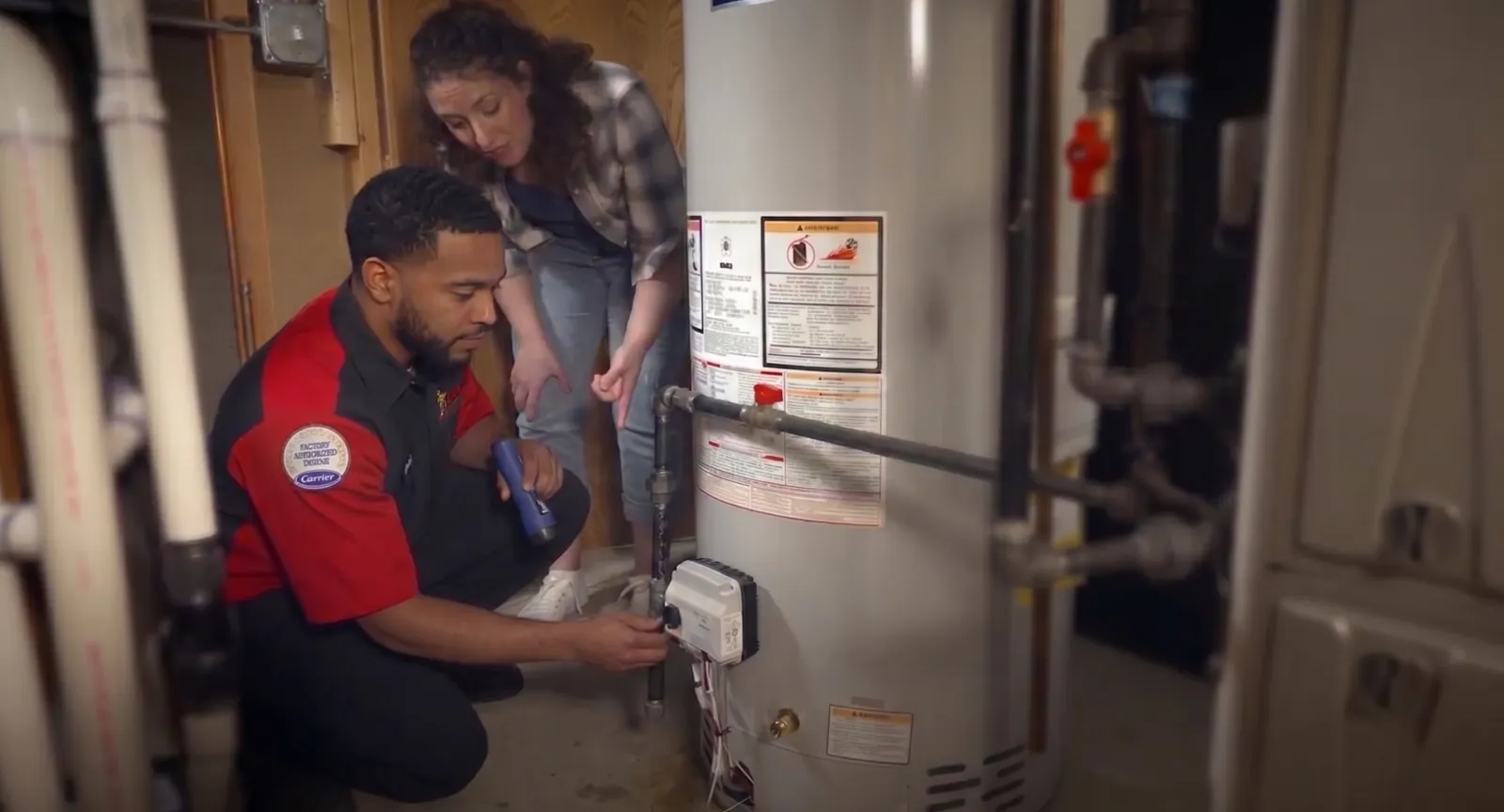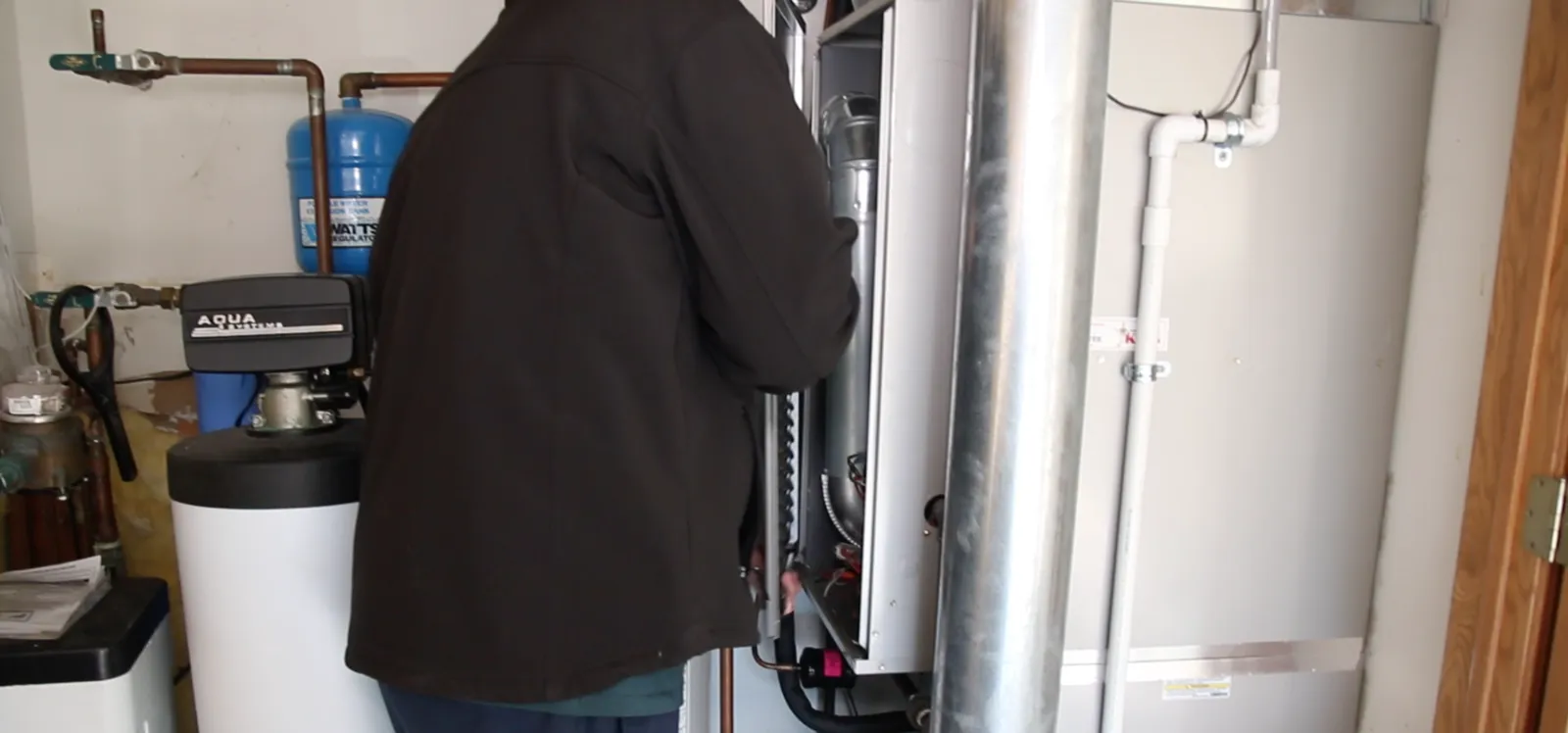

A standard tank water heater usually lasts 10 to 15 years. A tankless water heater lasts about 20. Where yours lands depends mostly on how hard your water is and whether the tank gets flushed.
If yours is past 10 years, it isn't time to panic. It's time to start watching for the signs below and to plan for a replacement on your schedule, not on the morning it floods the basement.
How long a water heater lasts, by type
| Type | Typical life |
|---|---|
| Gas or electric tank | About 10 to 15 years |
| Tankless (on-demand) | About 20 years |
King's water heater page puts a standard tank at 10 to 15 years. Past that, an older heater costs more to run and carries more risk of a leak. ENERGY STAR gives tankless water heaters a life expectancy of 20 years, longer than any standard tank.
Tanks wear out because they hold hot water all day. Minerals settle on the bottom, the steel slowly corrodes, and eventually the tank leaks. Tankless units don't store water, so they avoid most of that.
How to tell how old your water heater is
When you call about a water heater, our team will ask how old the tank is, and callers often aren't sure. "It was here when I moved in. It's at least 10 years old," one said. Another guessed "10 or 20 years" because the tank was original to the house. Here's how to find out for sure.
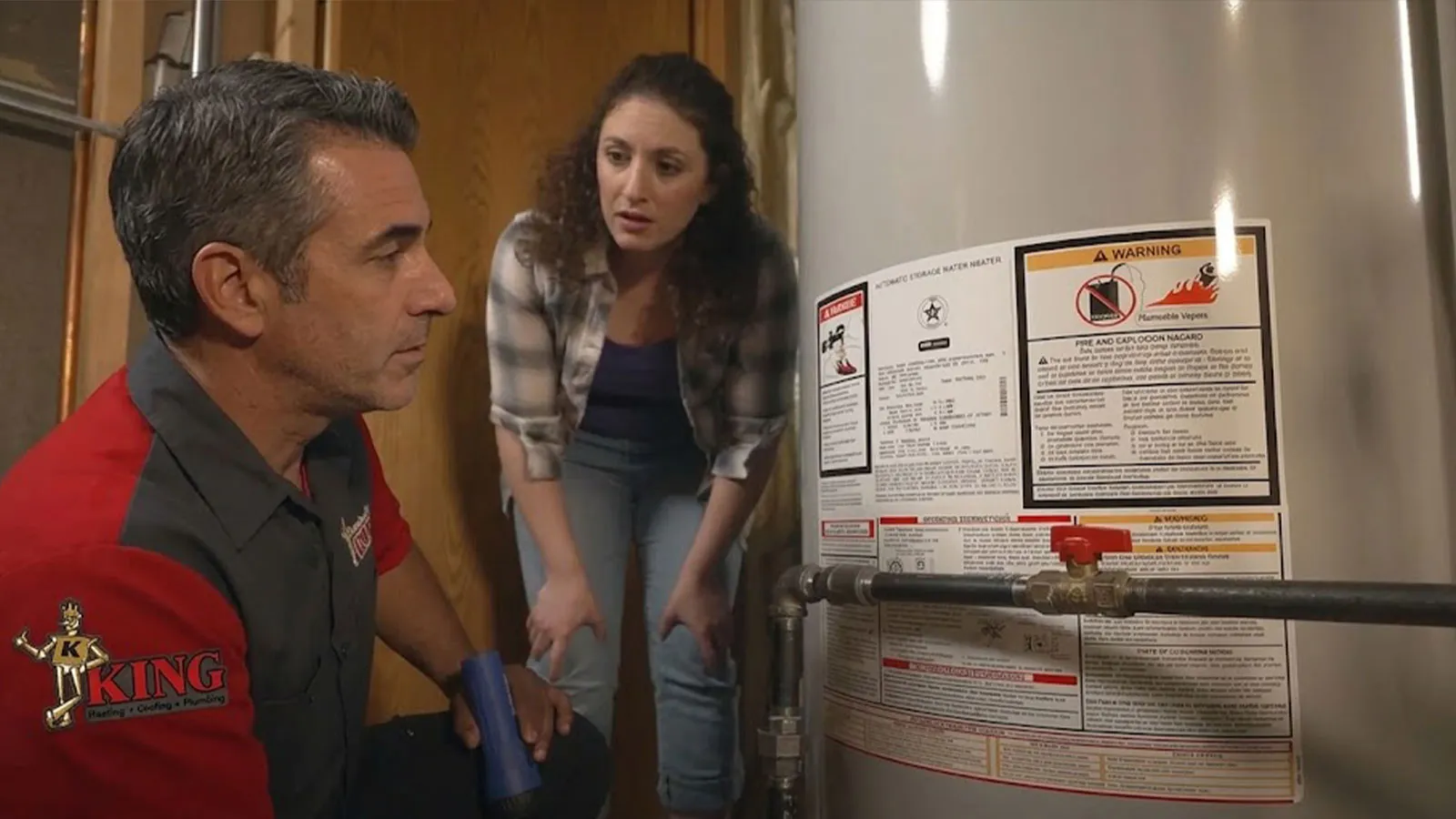
- Find the label on the side of the tank. It lists the model and serial number.
- Look for a manufacture date on the label. Some brands print it plainly.
- If there's no date, the serial number usually has it built in. Search the brand name plus "serial number date" or call the maker with the number.
- Check your home paperwork or old receipts for an install date. It's usually close to the manufacture date.
Tech tip
Once you know the year, write it on the tank with a marker. You'll never have to look it up again.
Knowing the age lets you plan. One caller told us, "We've got a 14 year old hot water heater which is working fine but I'm trying to be prepared for what we will do when it is no longer working fine." That's a smart call to make.
Signs your water heater is near the end
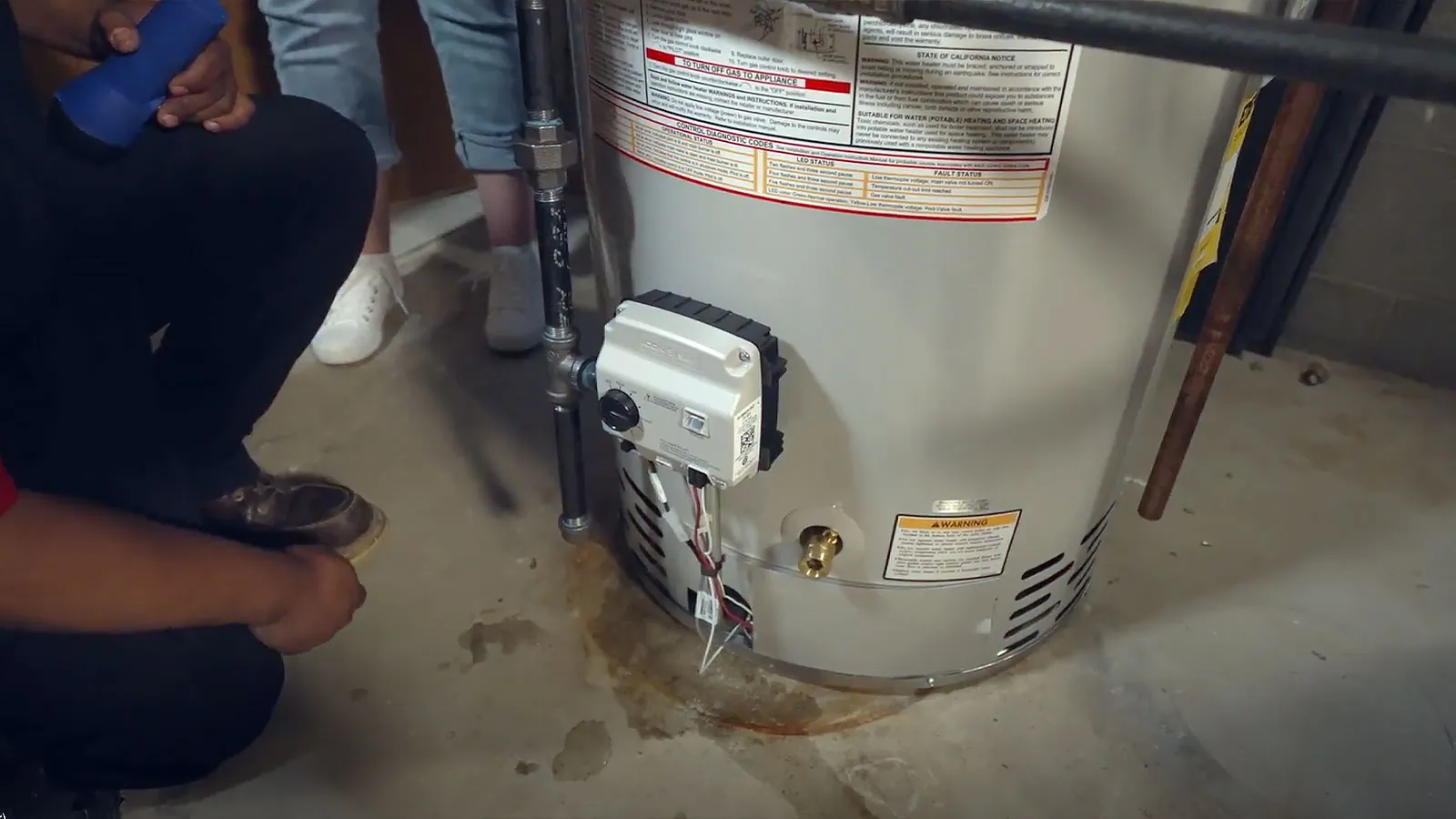
- Water around the base. Moisture at the bottom often comes before a full failure.
- Rust-colored hot water. Can mean the anode rod is used up and the tank is starting to corrode.
- Popping or rumbling. Usually sediment on the bottom of the tank.
- Hot water runs out faster than it used to. Sediment takes up room, or a part is failing.
- Age past 10 years along with any of the above.
Some calls come once the leak has started. "I have a 40 gallon water heater that needs to be replaced. It's leaking from the bottom," one caller said. Another had "a 20 year old 40 gallon water heater that is starting to leak at the... valve where you drain the tank." And sometimes there's no warning at all: a caller in Orland Park told us "our 50 gallon water heater just went out."
Heads up
If your water heater is leaking, shut off the water supply to the tank and call a plumber. A small leak at the base can turn into a full tank on the floor.
What shortens a water heater's life
Hard water. Chicago-area water is moderately hard. The minerals settle in the tank as sediment, which makes the burner or element work harder and wears the tank faster.
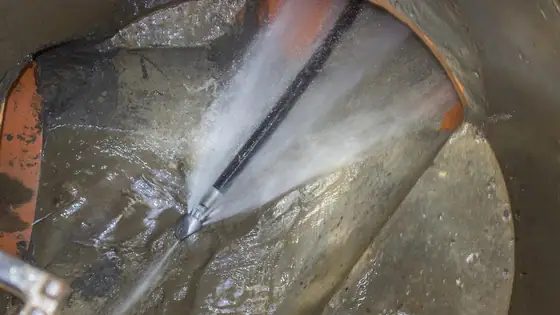
No flushing. A yearly flush clears that sediment out. King's water heater maintenance includes a tank flush, an anode rod check, a pressure-relief valve test and an inspection for leaks and corrosion. Our water heater care guide covers what you can do between visits.
A spent anode rod. The anode rod corrodes so the tank doesn't. Once it's gone, the tank is next. Read more in understanding water heater anode rods.
Too much pressure. High water pressure and heat expansion strain the tank and valves. The pressure-relief valve is your safety backup, and it needs a yearly test.
Should you replace a water heater before it fails?
One homeowner put the question this way: "I have no problems with it, but people are telling me it's always best to do it before there's a problem."
There are two honest answers. If the heater is well past 10 years and you'd rather not risk a leak, replacing it on your schedule means you pick the model, avoid a flooded basement and skip the cold-shower week. If it's working, isn't leaking and has been flushed, keeping it running is also reasonable. Have a plumber look at it and tell you which one fits your heater.
If a repair makes sense, King repairs it. If the age or the repair makes replacement the better buy, we'll say so and quote it up front. For more on that choice, see should I repair or replace my water heater? Current offers on new water heaters are on our coupons page.