
If your home has a closed water system and a tank water heater, yes. The Illinois Plumbing Code requires a properly sized thermal expansion tank on the cold water line near the heater. If your system is open, you may not need one, but a home can be closed without the owner knowing it.
An expansion tank is the small tank, often blue or gray, mounted on the pipe above or beside the water heater. It gives heated water somewhere to go so pressure doesn't build in your pipes.
What a water heater expansion tank does
Water expands when it's heated. A 40- or 50-gallon tank heating cold water up to temperature makes extra volume every cycle. In an open system, that extra water just pushes back toward the city main. In a closed system, it can't, so pressure climbs inside your pipes, fixtures and the water heater itself.
The expansion tank has an air cushion on one side of a rubber bladder. When the water expands, it squeezes into the tank and compresses the air instead of straining your plumbing. When you run a faucet, the air pushes the water back out.
What the Illinois Plumbing Code requires
Under the Illinois Plumbing Code, closed water systems with hot water storage must have a properly sized thermal expansion tank. It goes in the cold water supply as near to the water heater as possible, with no shut-off valve between the heater and the tank.
There's one exception. In existing buildings with a closed system, a properly sized pressure relief valve may be used instead of an expansion tank. If you're selling or putting in a new water heater, ask your village whether it wants one too.
New water heater on a closed system? Plan on an expansion tank. Existing system with no tank? Have a plumber check whether yours is closed.
How to tell if your water system is closed
A system becomes closed when something on the main water line lets water in but not back out. The usual culprits:
- A check valve or backflow preventer at or near the water meter
- A pressure-reducing valve on the main line, often a bell-shaped brass fitting near the meter
- A newer water meter with a built-in check valve
You can look near your meter for any of these. If you're not sure what you're looking at, a plumber can tell you in a few minutes. Older homes across the north suburbs, like the ones around Skokie, often have had meters and valves swapped over the years, so a home that was open when the water heater went in may be closed now.
Signs your expansion tank is failing
- The relief valve on the water heater drips or spits water
- The tank is rusty, wet or dripping at the top fitting
- Knocking on the tank sounds solid all the way up, with no hollow air side
- Faucets surge or pressure spikes when the heater runs
Some callers find out when it leaks. "The expansion tank, the little small little piece that's at the top of my water heater, is leaking," one told us, and the water had already reached the room on the other side. Another called because the expansion tank on a water heater we'd put in had cracked. And one caller just wanted an estimate to replace the one on their hot water tank.
Heads up
Don't cap or plug a dripping relief valve to stop the water. That valve is the safety backup for a tank that's under too much pressure. Call a plumber to find out why it's releasing.
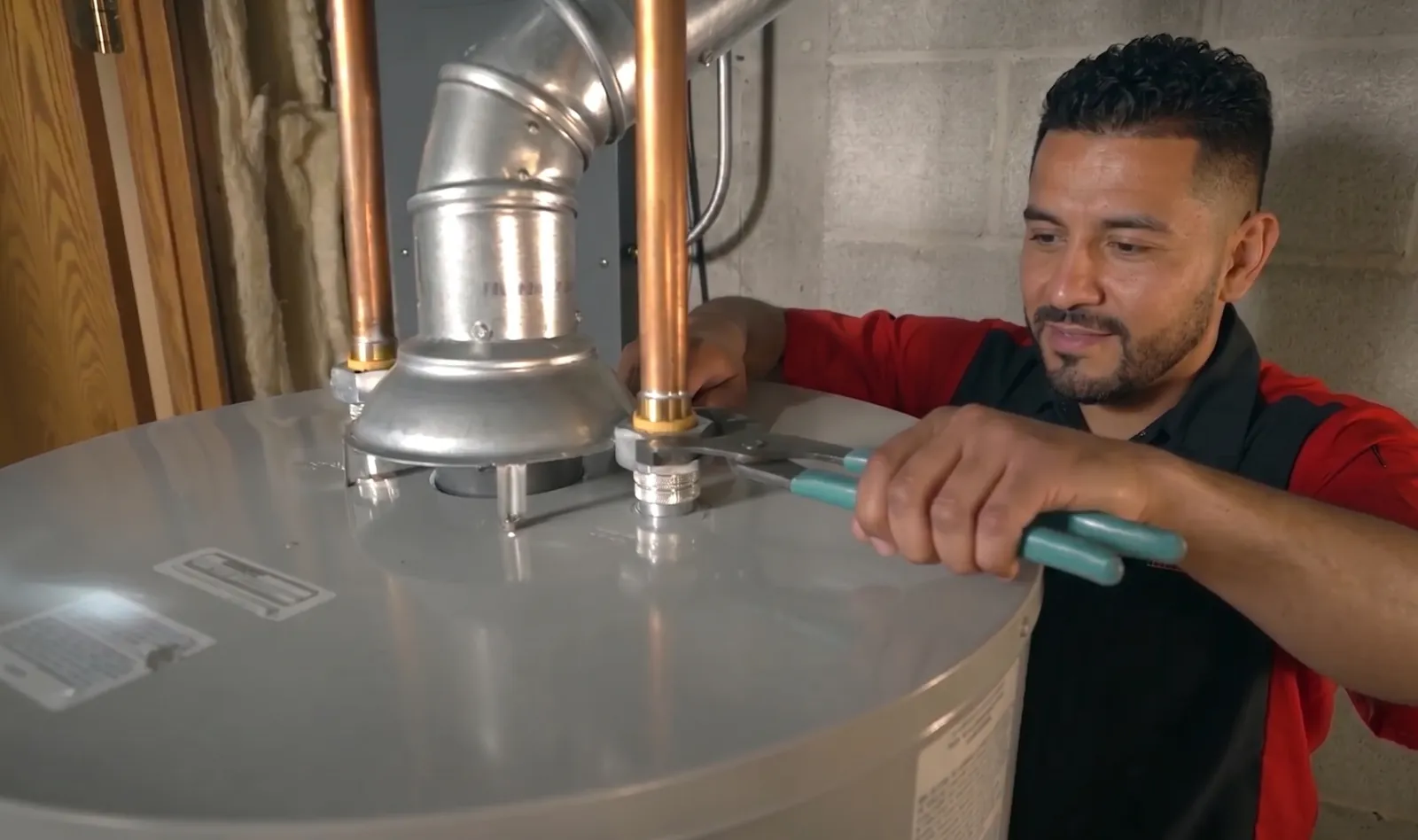
An expansion tank has to be the right size for your water heater and set to match your home's water pressure. A tank that's too small or charged wrong won't do its job. King's plumbers size it to your system when they install it, and check the pressure-relief valve during water heater maintenance.
Selling your home? Check this first
A village can ask for one before a sale goes through. One homeowner told us, "I'm trying to sell my home and the village had asked me to get somebody to install an expansion tank on my water heater." If you're listing a home with a tank water heater, look for an expansion tank now so it doesn't hold up your closing.
For more on keeping a water heater healthy, see our water heater care guide. Current offers are on our coupons page.