
A sump pump is the one piece of equipment in your home you almost never think about — right up until the night a spring storm rolls through, the power flickers, and the pit in your basement starts filling faster than anything you can see. In the Chicago area, where heavy spring rain, fast snowmelt, and clay-heavy soil all push water toward your foundation, that pump is the difference between a dry basement and thousands of dollars in cleanup.
This guide is built for the decision most homeowners eventually face: is it time to replace the sump pump, and what does that involve? We’ll cover how long a pump should last, the warning signs that it’s wearing out, what actually drives replacement cost, how to weigh repair against replacement, and what a professional installation includes. If you want the basics first — what a sump pump is and how it protects your basement — start there, then come back here for the replacement decision.
Why a Working Sump Pump Matters in Chicago
Chicago basements take on water for reasons that have nothing to do with dramatic flooding. The metro area sees soaking spring rains, a fast late-winter thaw that saturates the ground in a matter of days, and dense clay soil that drains slowly and holds water against foundations. In many older neighborhoods the water table sits close to basement-floor level, so groundwater pushes up from below even when it isn’t raining. The sump pump, sitting at the lowest point of the home, is the first line of defense against all of it.
1. It prevents basement flooding
Most flooded basements are the result of ordinary heavy rain or snowmelt collecting against the foundation — not a once-in-a-decade storm. A working pump moves that water out through the discharge line before it ever reaches your floor.
2. It protects against mold and structural damage
Even water that never fully floods a basement creates problems. Lingering moisture feeds mold and mildew, damages drywall and flooring, and over time can work on the foundation itself. Keeping the pit clear keeps those slow, expensive problems from starting.
3. It protects what’s in the basement
For most Chicago homes the basement holds real value: a furnace, a water heater, laundry, storage, and often finished living space. A pump failure puts all of it at risk at once.
4. It matters when you sell
With Chicago’s year-round precipitation, buyers and home inspectors look closely at the sump pump and the basement around it. A reliable, recently serviced pump is one less thing to negotiate over at closing.
5. It works hardest when you can’t step in
Pumps fail at the worst possible moments — overnight, mid-storm, or while you’re away from home. That’s exactly why the condition of the pump, and whether it has a backup, matters so much before the wet season starts.
How Long a Sump Pump Lasts — and the Signs It's Failing
Most sump pumps last about seven to ten years. The exact number depends on how often the pump runs, how much water it has to move, and how well it has been maintained. Pump type matters too: a submersible pump sits in the water and tends toward the lower end of that range, while a pedestal pump keeps its motor above the pit and often lasts longer. A pump that runs constantly through wet Chicago springs simply wears out faster than one that cycles a few times a week.
Rule of thumb
If your pump is 7 or more years old and a repair approaches the cost of a new unit, replacement is almost always the better call — you avoid paying to keep an aging pump alive only to face the same decision next storm season.
The hard part about a sump pump is that it lives out of sight and out of mind until the moment it’s needed. By then a failure is an emergency. The signs below are worth taking seriously on any pump approaching the seven-year mark.
Signs your sump pump is wearing out
- It’s 7 or more years old — or you don’t know how old it is
- It runs constantly, or cycles on and off rapidly, even when it isn’t especially wet
- It makes new noises — grinding, rattling, or a loud hum
- You can see rust or corrosion on the motor, the float, or the base
- Water discharge is weak, or water is left standing in the pit after it runs
- It vibrates hard enough to move in the pit, or has already failed once before
A single sign doesn’t always mean the pump is finished — a stuck float or a clogged line can mimic a failure. But several signs together, or any one of them on a pump that’s a decade old, is a clear cue to have it inspected before you’re depending on it during a downpour.
What You Can Check Before Calling a Plumber
A few of these checks take five minutes and occasionally reveal that the pump is fine and something simple was the culprit. None of them require tools. If anything looks off after running through them, that’s your signal to call for a professional sump pump inspection.
Test the pump with a bucket of water Each season
Slowly pour a bucket of water into the pit until the float rises. A healthy pump should switch on, drain the pit, and shut off on its own. If it doesn’t start, drains slowly, or keeps running after the water is gone, it needs attention.
Confirm the pump is sitting upright As needed
Most pumps draw water from the bottom and only work properly when upright. It’s surprisingly easy to bump one out of position in a basement — a tilted pump is a common cause of a "dead" pump that’s actually fine.
Clear the discharge line and outlet Each season
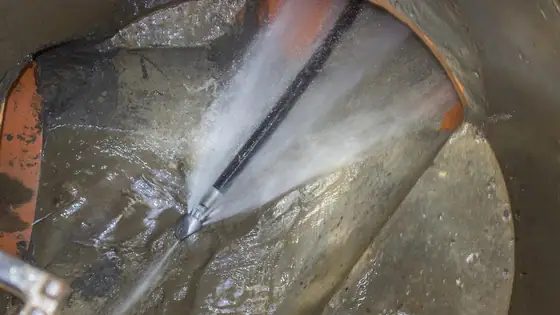
The pump has to send water somewhere. Make sure the discharge pipe and its exterior outlet are free of leaves, mulch, debris, or ice. A blocked line is one of the most common reasons a working pump still can’t keep up — and the same kind of clog our team clears during drain cleaning service.
Check the power connection and breaker As needed
The pump should be plugged into a grounded outlet on its own breaker. Look for a damaged or frayed cord, and if the pump is dead, check whether the breaker has tripped. Reset it once — but if it trips again, stop and call a plumber, because a repeat trip points to an electrical fault.
Test the backup battery Each season
If you have a battery backup, confirm it still holds a charge and the terminals are clean. Backup batteries fade after a few years, and a dead one does you no good during the storm that knocks out your power.
Schedule a yearly professional inspection Annual professional
The single best way to avoid a storm-night failure is a yearly check. King offers a free VIP plumbing inspection — a plumber tests the float, discharge, check valve, and backup, and flags wear before it becomes a flood. Book a sump pump inspection in late winter or early spring.
What Goes Into a Sump Pump Replacement Cost
There’s no single price for a sump pump replacement, because no two basements are the same. National averages floated online vary widely and rarely reflect what a specific Chicago home actually needs. What’s more useful is understanding the factors that move the number up or down, so the estimate you get makes sense.
Pump type and horsepower. A basic submersible pump sized for an average basement sits at the lower end. Homes that take on a lot of water need more horsepower or a higher-capacity pump, which costs more. Pedestal versus submersible also affects price.
Battery backup or a second pump. Adding a battery backup system, or a redundant primary pump on its own circuit, raises the upfront cost — but in a flood-prone Chicago basement, it’s often the part that actually saves you during a storm.
The condition of the pit and plumbing. If the existing pit, discharge piping, and check valve are in good shape, a straightforward swap is faster and cheaper. If the discharge line needs to be rerouted or the pit needs work, that adds labor and materials.
Smart features. Pumps with water-level alarms or Wi-Fi alerts that notify your phone cost more than a basic float-switch unit, but they buy you early warning.
How King handles pricing
Because the right answer depends on your home, King provides up-front pricing after a free VIP inspection — a plumber looks at your pit, plumbing, and water load, then gives you a written estimate before any work starts. There are no surprise charges added after the visit.
If you’d rather spread out the cost of a full system, financing options are available. For current details and to request an estimate, see the sump pump service page.
Repair vs. Replace: How to Make the Call
Not every sump pump problem means a replacement. The decision comes down to three things: how old the pump is, what the repair would cost relative to a new unit, and whether the pump has a history of trouble. Here’s the framework most plumbers use.
Repair usually makes sense when…
The pump is under about 5 to 7 years old, this is its first real issue, and the fix is something contained — a stuck or failed float switch, a clogged discharge line, or a worn check valve — that costs well under the price of a new pump.
Replacement usually makes sense when…
The pump is 7 to 10 years or older, it’s failed before, the motor or impeller has gone, or the repair would approach the cost of a new sump pump installation. At that point you’re spending real money to keep an aging pump going.
Factor in newer features
A replacement is also a chance to add protection an old pump never had — a battery backup, a higher-capacity motor, or a smart alarm. If your current pump struggled to keep up, a properly sized new system solves the problem, not just the symptom.
Don’t let a storm decide for you
The worst time to replace a pump is mid-flood, when you’re competing for emergency slots and have no time to compare options. If the warning signs are there, having the conversation on a dry day in late winter puts you in control.
A note on warranties
New sump pumps typically carry a manufacturer warranty of one to three years. A do-it-yourself installation may, in many cases, affect that coverage — and an improperly installed pump can fail when you need it most. Professional installation by a licensed plumber protects both the warranty and your basement.
Upgrades That Add Protection Beyond the Pump
When you’re already replacing a pump, it’s the natural moment to think about redundancy. A single pump on a single power source is one failure away from a wet basement. A few additions make the whole system far more resilient — especially in storm-prone Chicago, where the heaviest rain and the power outages tend to arrive together.
Battery backup system
The storms most likely to flood a basement are also the ones most likely to cut the power. A battery backup keeps the pump running when the electricity is out. Plan on replacing the battery every few years and testing it each season.
A second (backup) pump
Many homeowners add a second pump, ideally on its own circuit, that takes over if the primary fails. King installs these redundant setups, and that extra pump has saved plenty of local basements from a single point of failure.
Water alarm or smart monitor
Even a good pump can be overwhelmed if water comes in faster than it can move. A basic alarm sounds when the level gets too high; a smart model sends an alert to your phone, so you know before you walk downstairs into a problem.
Don’t wait for the next storm
If your pump is aging, or you’ve never had it inspected, the time to act is now — not during a downpour. A free VIP inspection tells you where you stand. Explore leak detection and repair too if you’ve spotted moisture beyond the pit.
What's Included in a Professional Sump Pump Replacement
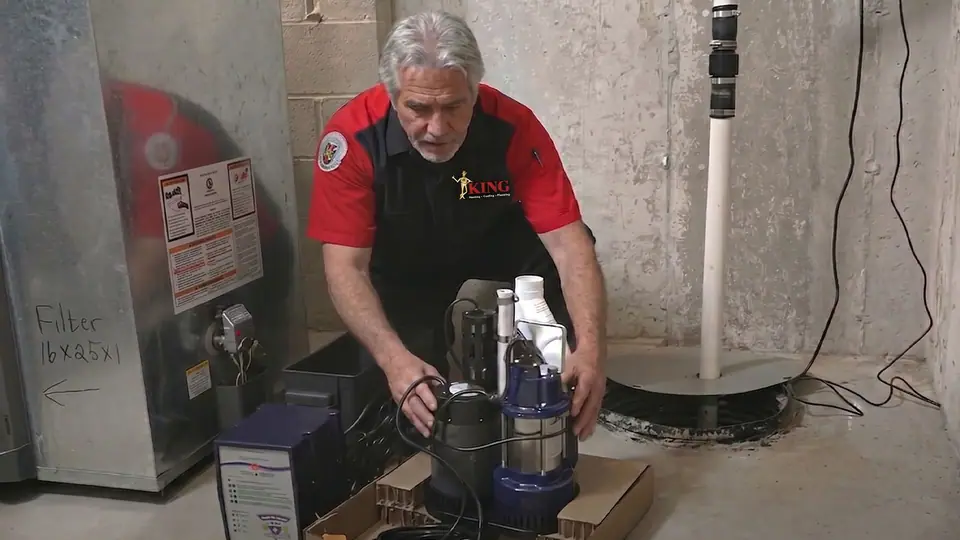
A replacement from King is more than swapping one pump for another. A plumber works through the whole system so the new pump is sized right, connected right, and actually tested before they leave. Here’s what a typical replacement covers:
- Inspect the pit, float switch, check valve, and discharge line
- Confirm the correct pump type and horsepower for your home’s water load
- Remove the old pump and clear dirt, gravel, and debris from the pit
- Install the new pump and connect the discharge piping and check valve
- Verify a proper, grounded electrical connection on a dedicated circuit
- Install or test a battery backup, if your system has one
- Run the pump through a full cycle to confirm it switches on, drains, and shuts off
- Provide up-front pricing and back the work with King’s satisfaction guarantee
What’s included vs. what’s separate
The price of the new pump depends on the type and horsepower you choose, and on whether you add a battery backup or a second pump. If the existing pit or discharge plumbing needs additional work, that’s quoted separately and explained before it’s done — you approve the full cost before the plumber begins.
Prefer to set it and forget it? The King Royal Treatment Plan bundles ongoing maintenance with priority scheduling, so your plumbing and HVAC checks stay on the calendar without you having to track them.
When to schedule
Late winter through early spring — roughly February to April — is the right window in the Chicago area. You want the pump checked or replaced before the spring rains and the big snowmelt arrive, while appointments are still easy to get. Waiting until the first heavy storm means competing for emergency service with every other homeowner whose basement just started taking on water. If your pump fails outside that window, King offers 24/7 emergency plumbing repair across Chicago and Northwest Indiana.
How to Choose the Right Plumbing Company
A sump pump protects everything in your basement, so the plumber who installs it matters as much as the pump itself. A few things worth looking for:
Longevity in the Chicago market. A company that has worked here for decades has seen every basement type, soil condition, and water problem the region produces. King has served Chicago and Northwest Indiana since 1968 — you can get to know the team before you call.
Licensed, certified plumbers. Sump pump work touches plumbing and electrical systems, so it should be done by licensed, certified plumbers — not a handyman. King sends certified plumbers in marked company vehicles for every job.
A strong local track record. King was voted #1 in Plumbing in the 2025 Daily Southtown Best of Chicago’s Southland awards and holds thousands of customer reviews across the area. Public recognition like that reflects how a company treats the homeowners it serves.
The BBB Torch Award for Ethics. The Better Business Bureau’s Torch Award isn’t self-reported — it’s earned through an application and review process, and it reflects how a company handles transparency, disputes, and customer relationships.
Up-front pricing and a free inspection. A company that inspects first, then gives you a written quote before starting — and explains what is and isn’t included — is the kind you want involved in a repair-versus-replace decision. King’s free VIP plumbing inspection and up-front pricing are built around exactly that.
24/7 availability. Sump pumps fail at night, on weekends, and during the worst storms of the year. A team that answers the phone at 2 a.m. during a downpour is a different kind of partner than one that only works business hours. King’s full-service plumbing team is available around the clock, and every job is backed by a 100% satisfaction guarantee.