
A cable snake punches through a blockage to restore flow. High-pressure water scours the whole inside of the line and flushes the buildup away. For most household clogs, a snake is the right tool and the faster fix. For recurring backups and heavy grease, jetting is what actually solves the problem.
King's plumbers carry both, and we've been doing professional drain cleaning across Chicago and Northwest Indiana since 1968.
How drain snaking works
A drain snake, also called an auger or a rod, is a flexible steel cable fed into the line from a cleanout or the fixture itself. A cutting or grabbing head on the end either breaks the obstruction apart or hooks it so the plumber can pull it out. It's mechanical, direct and effective on what most often stops a household drain: hair, soap buildup, food waste and foreign objects.
- Best for: a single slow or stopped fixture, like a sink, tub, shower or toilet.
- Fast: most household clogs are cleared in one visit.
- Gentler on the pipe: usually the safer first choice in older homes where pipe condition is unknown.
- The limitation: it opens a channel through the blockage but doesn't remove what's coating the pipe wall, so the buildup that caused the clog is still there.
How hydro-jetting works
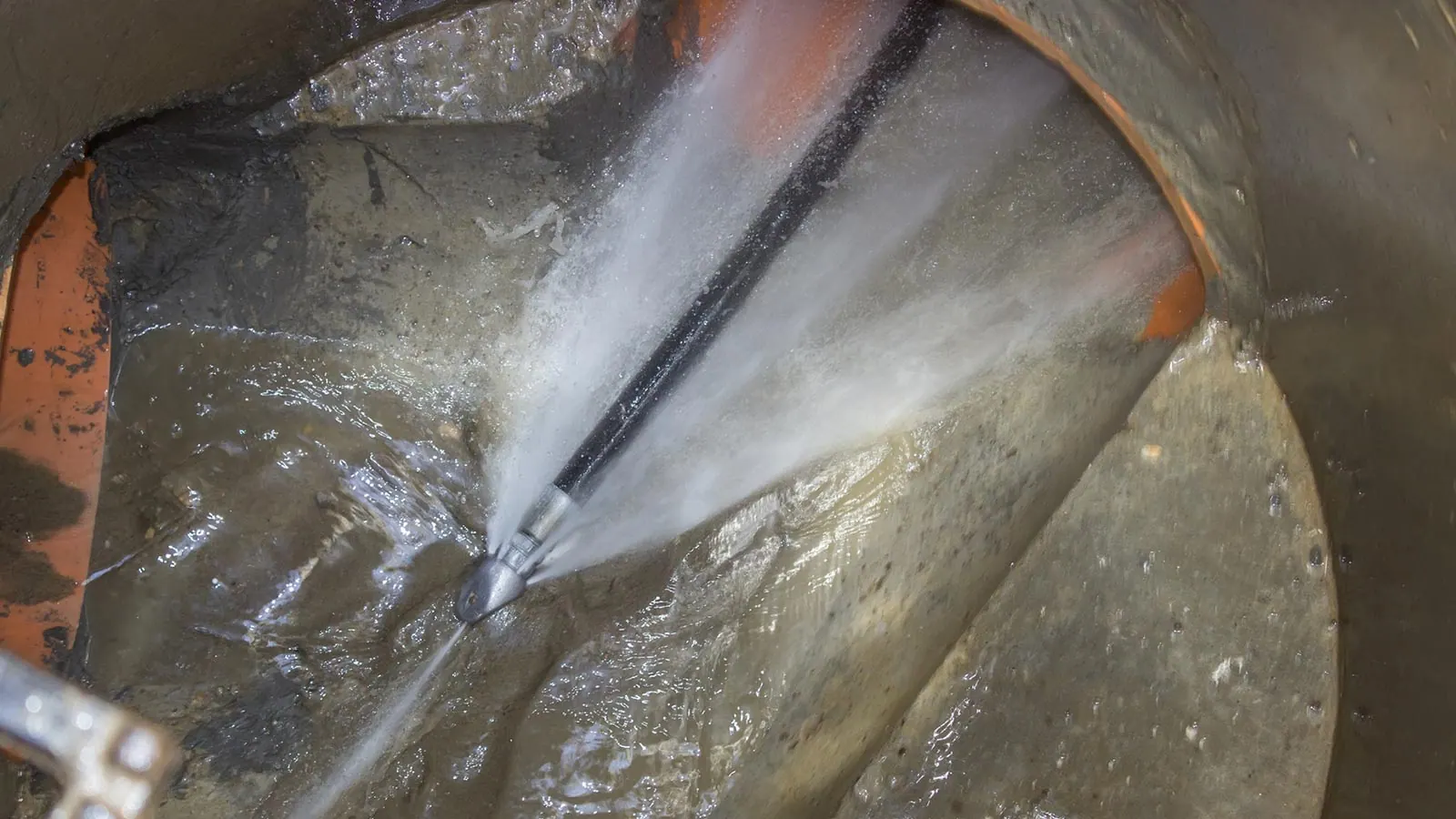
Hydro-jetting uses a hose and a specialized nozzle to send high-pressure water both forward and backward inside the pipe. The forward jets cut through the blockage. The rear-facing jets pull the hose along and flush debris back toward the cleanout. The result is a pipe scoured closer to its original inside diameter, not a channel bored through the gunk.
- Best for: recurring clogs, kitchen lines heavy with grease, and lines carrying years of scale and sludge. Related: how scale builds up in pipes.
- Thorough: removes the residue a cable leaves behind, which buys you longer between calls.
- No harsh chemicals: water pressure only.
- The limitation: pipe condition governs. A cracked, badly corroded or collapsing line isn't a jetting candidate.
Side by side
| Item | Snaking | Hydro-jetting |
|---|---|---|
| What it does | Bores through the clog | Scours the pipe wall |
| Typical use | One blocked fixture | Repeat clogs and main lines |
| Grease | Cuts through it, leaves the rest | Flushes it out |
| Tree roots | Can clear intrusion | Can clear intrusion |
| Old or fragile pipe | Usually the safer first move | Needs assessment first |
| How long the fix lasts | Until buildup closes the channel | Generally longer when buildup is the cause |
Neither method repairs the crack or joint that roots came through. If a camera inspection shows structural damage, clearing the line is a temporary measure.
How King decides which to use
| Situation | What we typically do |
|---|---|
| First visit, single fixture, no history | Snake it. It's faster and it's enough. |
| Third call on the same line this year | Talk about jetting, because clearing it again won't change the pattern. |
| Kitchen line with grease | Jetting is usually the honest recommendation. |
| Older home, unknown pipe condition | Assess before we jet. If the line can't take it, we'll tell you. |
| Every drain in the house backing up | That's a main line problem. Turn the water off and call us. |
Our team clears, rods and jets drain and sewer lines and responds to backups. If you suspect the problem is further down the line than one fixture, read about sewer line problems, causes and prevention, or our look at sewer rodding vs. hydro-jetting for main lines.
When it's not the drain at all
If several fixtures clog at once, such as a toilet that backs up when the washing machine drains or a tub that fills when the sink runs, the blockage is in the main line, not the individual drain. Turn the water off and call for 24/7 service. Adding water risks a sewage backup through the lowest drains in the house.
Other problems that look like drain clogs are covered in our guides to common plumbing problems and plumbing in older homes.
Keeping drains clear between visits
- Keep grease, oil and coffee grounds out of the kitchen sink. They're the leading cause of the clogs we jet.
- Know what belongs in a garbage disposal and what doesn't.
- Skip the chemical drain cleaner. It rarely fixes a real clog and can damage the pipe.
- Use drain screens in showers and tubs. Hair is the single most common bathroom blockage.
- If your home backs up after heavy rain, ask about backflow prevention and check your sump pump.