
Change a standard furnace filter every one to three months. The type of filter decides most of that range, and your home decides the rest. Pets, allergies, construction dust and a furnace that runs all day in January all push you toward the short end.
The simplest rule: check it once a month. If it looks gray, change it.
How often to change your furnace filter
ENERGY STAR tells homeowners to inspect, clean or change furnace and AC filters once a month. That's the check. How often you actually swap it depends on the filter and the house.
| Your situation | How often to change it |
|---|---|
| Basic disposable filter | About every month |
| Pleated filter, no pets, no allergies | Every 2 to 3 months |
| Pets, allergies or asthma in the house | Every month, or as soon as it looks dirty |
| Remodeling, sanding or new construction dust | Check weekly while the work is going on |
| Washable or electrostatic filter | Clean it on the schedule its maker gives |
King's filter guide puts it the same way: every one to three months, depending on the type. The filter you use changes the timing more than most people think.
Winter matters too. In a Chicagoland January, your furnace may run most of the day. More hours of airflow means the filter loads up faster than it does in a mild October, so check it more often once it's cold.
Signs you need to change it sooner
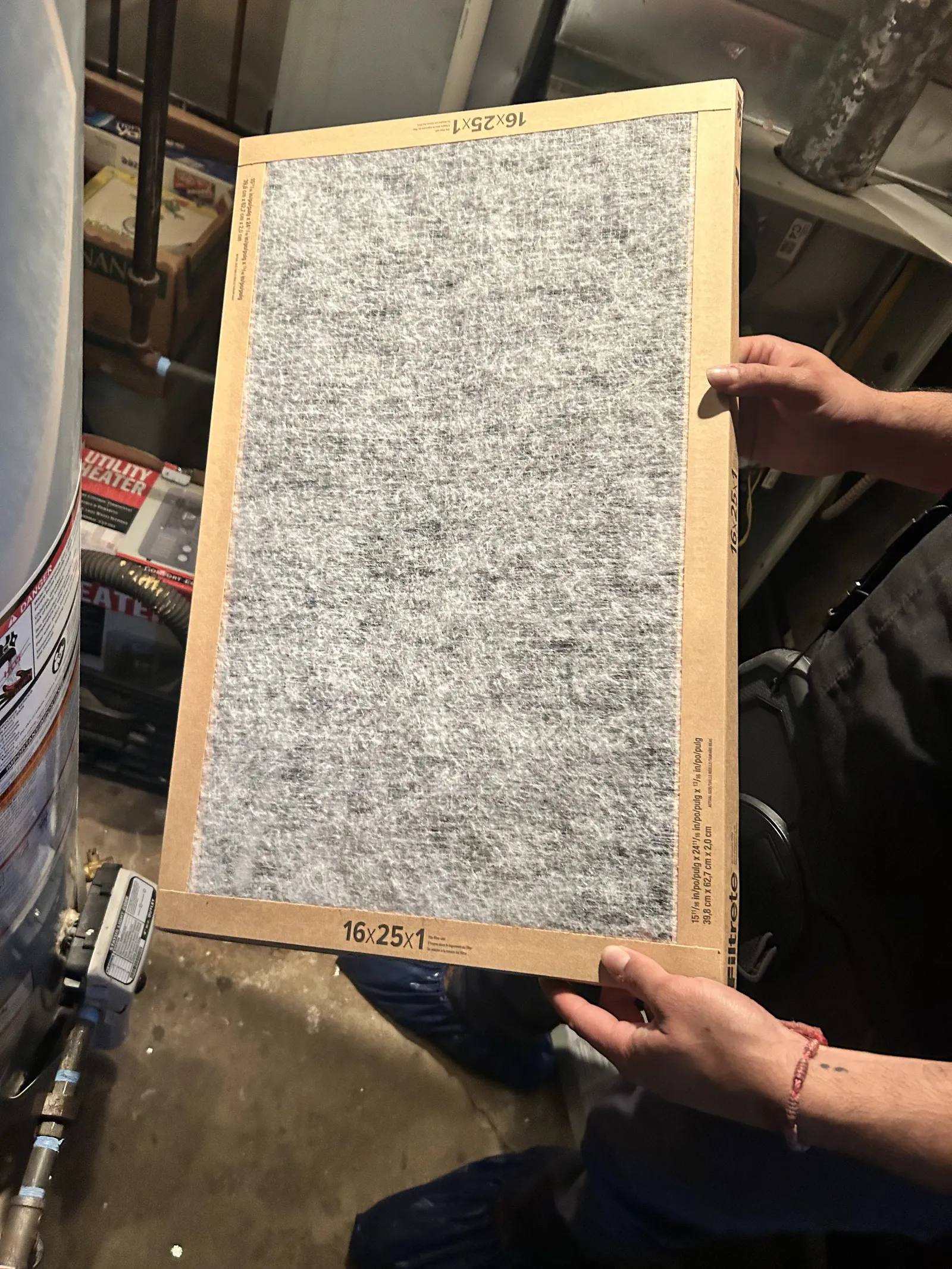
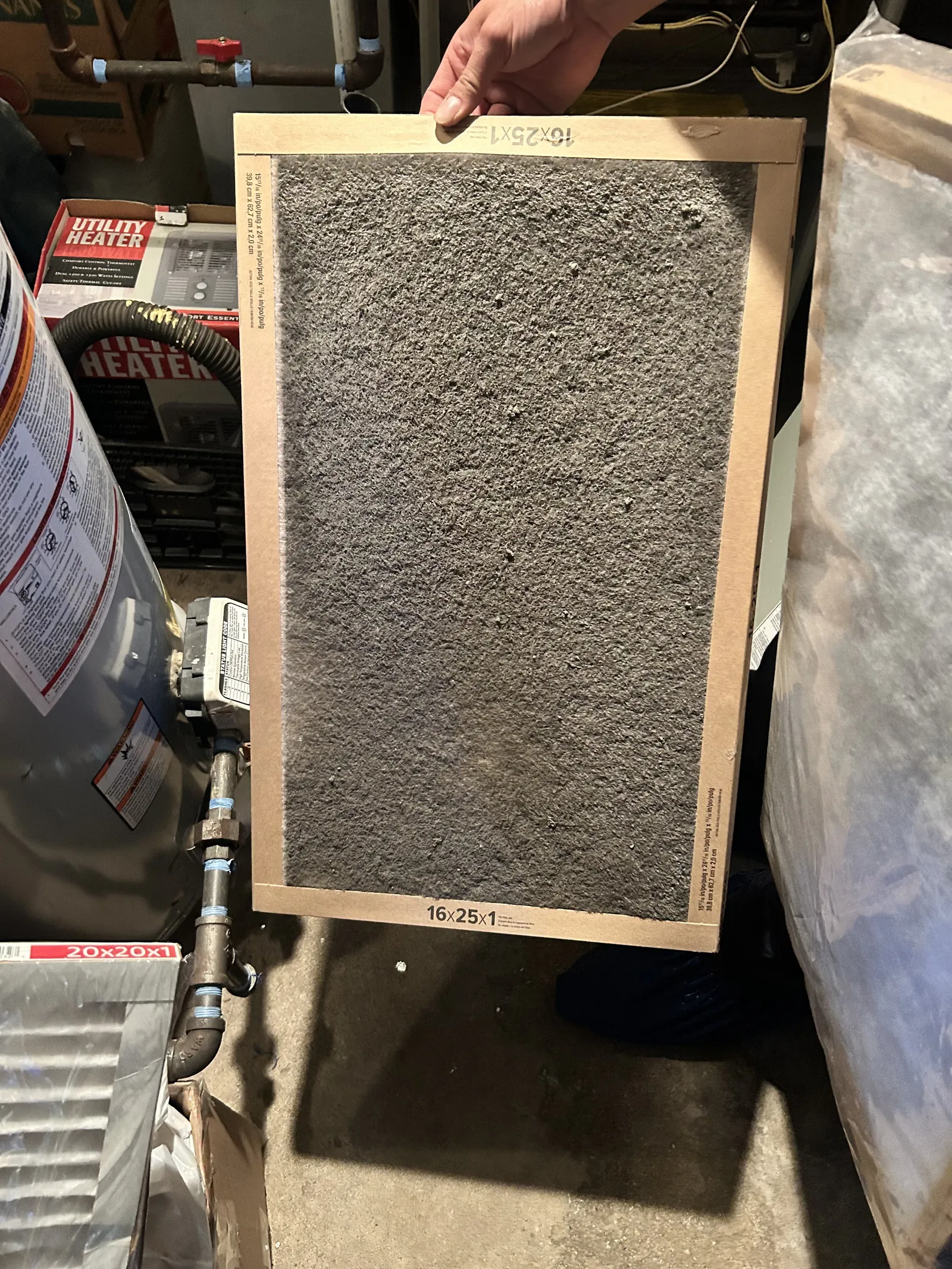
- The filter is gray or you can't see light through it
- Dust settles on furniture faster than usual
- Some rooms feel weaker airflow from the vents
- The furnace runs longer to reach the thermostat setting
- The furnace turns on and off in short bursts
When someone calls us with a furnace or AC that isn't keeping up, our team will usually ask whether the filter has been changed lately. Sometimes that's the whole fix: one caller whose burner kept pulsing on and off changed the air filter, and it seemed to correct it. Another told us a technician found "the filters were just black. And I had two of them in less than a month."
Heads up
A badly clogged filter restricts airflow. That makes the furnace work harder and can lead to overheating and shutdowns. If a new filter doesn't fix the problem, turn the furnace off and call for service.
How to find your filter size
Pull the old filter out and read the frame. The size is printed on the edge, like 16x25x1. The three numbers are width, height and thickness in inches. Buy that exact size: one caller's new filter was too small and fell all the way into the furnace.
Callers often ask us what size their furnace takes. "I need to get some furnace filters, and I can't remember the size," one said. Another had just bought a new furnace, and the paperwork didn't list "what filter number or model number I'm supposed to use."
Tech tip
Once you know the size, write it on the furnace cabinet with a marker and take a phone photo of the old filter's label. Next time you're in the store, you'll have it.
Which filter to buy
Buy the size and type your furnace is made for. A thicker or denser filter isn't always better if your system wasn't built for it, because it can slow airflow. Your furnace manual or a technician can tell you what it takes.
| Filter type | How it works | Best for |
|---|---|---|
| Generic (disposable) | Inexpensive. If you can see through it, dust gets through too. | Basic protection for the equipment |
| Washable (reusable) | Higher quality. You wash it instead of replacing it. | Pets, smoking, allergies or asthma |
| Electrostatic | Reusable, with a small electrical charge that catches allergens and dust. | Families with allergies or who get sick often |
Some furnaces call for a basic, low-resistance filter so air moves freely. One caller told us their furnace's maker calls for basic filters for maximum airflow. If your manual says that, follow it. For a full rundown, see the types of air filters for your HVAC system.
Our offices don't sell filters over the counter, but our technicians carry them on the truck, so you can have one put in during a service visit. If you'd rather not keep track at all, King's Filter Club delivers the right filters to your door on the schedule you pick.
How to change a furnace filter
- Turn the thermostat off so the blower isn't running.
- Find the filter slot. It's usually where the return duct meets the furnace, or behind a return grille on a wall or ceiling.
- Slide the old filter out and note the size and the airflow arrow.
- Slide the new filter in with the arrow pointing toward the furnace.
- Close the slot cover and turn the thermostat back on.
- Write the date on the new filter's frame.
Changing the filter is the one furnace job King tells homeowners to do themselves. Leave the rest of the furnace to a technician. During a furnace tune-up, the tech inspects the filter along with the blower, burners and safety controls. Homeowners in Oak Forest and across the south suburbs can call (708) 687-6898 any time with a filter question.