
For most Chicago-area homeowners, the air conditioner runs nearly continuously from June through September—and the last thing you want is for it to fail on the hottest night of the year. The good news: most AC breakdowns are preventable.
In this guide, we cover everything you need to know about keeping your air conditioner running at peak performance—from simple tasks you can do yourself to the professional tune-up that should be on every homeowner’s annual calendar.
Why AC Maintenance Matters
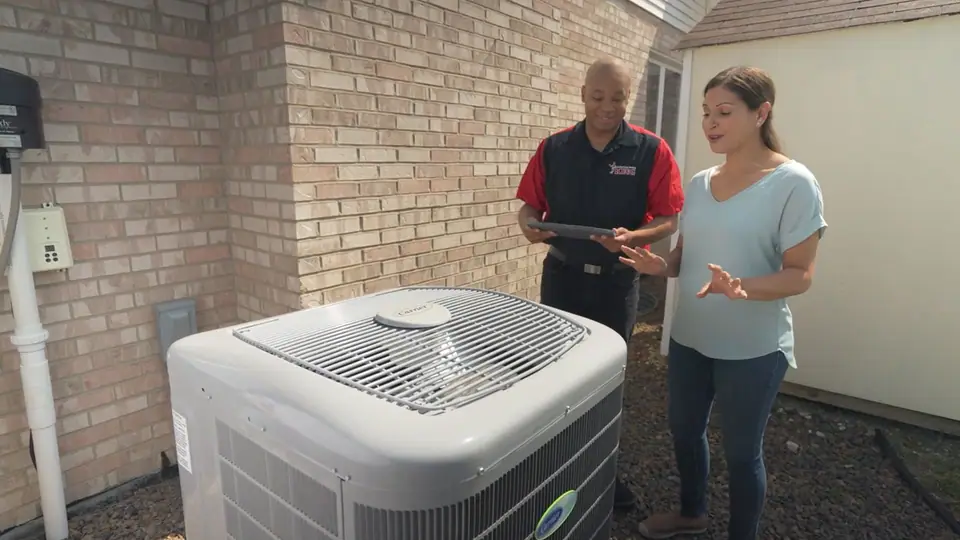
Regular AC maintenance isn’t optional—it’s as essential as oil changes for your vehicle. Here’s what’s at stake when you skip your annual tune-up.
1. Prevent Costly Breakdowns
Regular tune-ups dramatically reduce the risk of an in-season breakdown—the kind that leaves you waiting hours for an emergency AC repair technician. Even if a single spring tune-up prevents just one major repair, you’ve already earned a return on your investment.
2. Lower Your Energy Bills
As dust builds up and components wear down, your air conditioner has to work harder—running longer cycles and drawing more power. Without annual maintenance, efficiency can drop by 5–10% or more per year. A professional tune-up can help restore lost efficiency, with potential energy savings that offset a meaningful portion of the service cost.
3. Extend the Life of Your System
Most air conditioners last between 12 and 17 years—but well-maintained systems frequently reach 20+. Regular maintenance reduces strain on the system, keeping it productive before you eventually need AC installation.
4. Protect Your Manufacturer’s Warranty
Most manufacturer warranties—including coverage on major components like the compressor—require annual professional maintenance to remain valid. Skip a year, and you could void coverage worth thousands of dollars.
5. Improve Indoor Air Quality
Over time, dust and debris clog your air filter, accumulate in your ducts, and recirculate through your home. Pairing your tune-up with professional air duct cleaning is worth considering—especially if allergy season seems to last all summer.
6. Stay Comfortable All Summer
Spotty cooling—one room freezing, another stifling—is a classic sign of deferred maintenance. See our guide on how humidity affects your AC for additional context.
How Long Does an Air Conditioner Last?
One of the most common questions homeowners ask is how long they can expect their AC to keep running. The honest answer: it depends more on how you treat it than how old it is.
Systems that hit the 20-year mark tend to share a few things in common: professionally maintained every year, repairs addressed promptly before they compound, correctly sized and installed from day one, and a home energy load kept reasonable through good insulation and sealed ducts.
It’s About Mileage, Not Just Age
Think of your AC the same way you think about a car. A vehicle driven 30,000 miles a year wears out faster than one that sees 10,000—regardless of the model year. A system in a poorly insulated home, running flat-out for 14 hours a day, accumulates wear far faster than one in a tight, efficient home that cycles normally.
Chicago’s summers compound this. Humidity levels regularly reach 65–75% or higher during peak season, meaning your AC isn’t just cooling the air—it’s also working to remove moisture. That dual workload puts real stress on the compressor and blower motor. The more you reduce that burden through good insulation, airflow, and annual maintenance, the longer your system will last.
Signs Your System May Be Nearing End of Life
Even with good maintenance, there comes a point where repair costs start to outweigh keeping an aging system running. Watch for these warning signs:
- The system is over 15 years old and requiring increasingly frequent repairs
- Energy bills keep climbing despite normal usage patterns
- The AC struggles to maintain a comfortable temperature on hot days
- You’re being told the compressor or another major component needs replacing
- Refrigerant leaks are becoming a recurring issue
Rule of thumb: If a repair would cost more than half the price of a new system and your unit is already past 12–15 years old, replacement is often the smarter financial decision. A newer, high-efficiency system will also cost significantly less to run each month.
Related ReadingNot sure whether to repair or replace? See: 5 Signs You Need a New Air Conditioner.
Essential AC Maintenance Tasks
AC maintenance falls into two categories: things you can handle yourself regularly, and things that need a professional. Both matter. Skipping the DIY tasks between tune-ups is like getting your oil changed once a year but never checking the tire pressure. Here’s the full picture.
Change Your Air Filter
Every 60–90 days
This is the single most impactful thing a homeowner can do between professional visits. Your air filter traps dust, pet dander, pollen, and airborne particles before they circulate through your home—but over time that buildup restricts airflow. When airflow is restricted, your AC works harder to move the same amount of air, straining the blower motor and accelerating wear across the whole system.
For most households with a standard 1-inch pleated filter, every 60–90 days is a realistic target. If you have pets or anyone with allergies, aim for every 45–60 days. If you have a 4-inch media filter, you may only need to replace it once or twice a year—check the manufacturer’s recommendation for your specific setup. Stock up at our air filter page.
Keep the Outdoor Unit Clear
Each season
The condenser unit is responsible for releasing the heat pulled from inside your home. To do that efficiently, it needs unrestricted airflow on all sides. When leaves, grass clippings, mulch, or overgrown shrubs crowd the unit, it can’t dissipate heat properly—driving up energy use and shortening the compressor’s life.
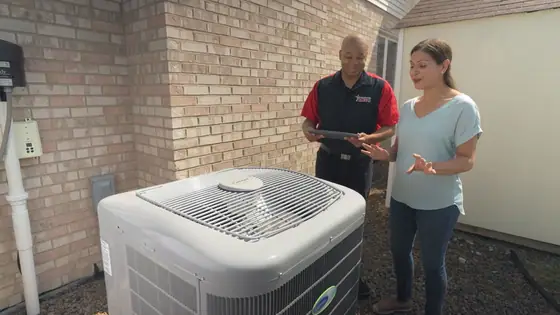
There’s another seasonal hazard that Chicago homeowners often overlook: mice. Over winter, outdoor AC units make ideal shelters for rodents looking for warmth. They nest inside the unit and chew through wiring, insulation, and components—damage you won’t discover until you fire up the AC for the first time in spring. Luke Willson from King explains it well:
Keep a minimum of 2 feet of clearance on all sides and at least 5 feet above the unit. At the start of each cooling season, inspect the unit—and around it—for any signs of nesting before startup. Gently hose off the fins to remove winter buildup, and never stack anything against the unit or plant shrubs directly adjacent to it.
Inspect the Condensate Drain Line
Each season
As your AC cools the air, it removes humidity—and that moisture drips off the evaporator coil into a drain pan, then exits through the condensate drain line. In Chicago’s humid summers, this line handles a significant volume of water every single day.
Over time, algae, mold, and debris build up inside and can cause a clog. If the drain pan overflows and your system doesn’t have a float switch to shut it down automatically, you can end up with water damage around your air handler. Check periodically for standing water or moisture near the indoor unit—a clogged drain line is a quick fix when caught early and a much bigger problem if ignored.
Clean the Coils
Annual professional
Your AC has two sets of coils: evaporator coils inside (which absorb heat from your home’s air) and condenser coils outside (which release that heat). When either gets coated with dust or grime, it acts as insulation that blocks heat transfer—forcing longer cycles and harder running to reach the same temperature.
Dirty condenser coils are particularly common and can cause the compressor to overheat, which is one of the most expensive AC failures. Coil cleaning is part of a professional tune-up, but keeping the area around the outdoor unit clear year-round helps significantly. For a detailed breakdown: How to Clean AC Coils for Optimal Performance.
Check Vents and Returns
Periodically
Your AC is designed to move a specific volume of air. When supply vents are blocked—by furniture, rugs over floor registers, or closed dampers—air pressure builds up in the ductwork and strains the blower. Blocked return vents restrict airflow back into the system and can cause the evaporator coil to freeze over.
Walk through every room and confirm all supply and return vents are fully open and unobstructed. It’s a common myth that closing vents in unused rooms saves energy—in most forced-air systems, it actually has the opposite effect.
Monitor Your Thermostat
As needed
A thermostat that reads temperature inaccurately causes your AC to cycle incorrectly—running too long, shutting off too early, or short-cycling repeatedly. If certain rooms are never comfortable despite the system running, or if energy bills seem disproportionately high, the thermostat is worth checking.
If you’re still on a basic manual or older programmable thermostat, upgrading to a smart thermostat is one of the best investments available for both comfort and efficiency. Modern smart thermostats learn your schedule, adjust automatically when you’re away, and provide detailed energy usage data. Some Chicago-area utility companies even offer rebates for qualifying installations.
Reduce Your AC’s Workload to Extend Its Lifespan
Every hour your air conditioner runs, it accumulates wear. What you can control is how hard it has to work during those hours. A home that loses cool air quickly through poor insulation or a leaky envelope forces your AC to run more often and longer to compensate. Over a 15-year lifespan, that extra mileage adds up to real wear on real components—and a shorter useful life.
Add Attic Insulation
On a hot Chicago day, your attic can reach temperatures well above 130°F. Without adequate insulation between your attic and living space, that heat radiates downward continuously—creating a cooling load your AC has to fight against around the clock.
The U.S. Department of Energy recommends R-49 to R-60 insulation for attics in Climate Zone 5, which covers the Chicago area. Many older homes fall far short of that. Upgrading is one of the highest-ROI improvements available, with benefits that carry into heating season as well.
Seal Your Air Ducts
When ducts develop gaps, cracks, or loose connections—common in older homes with flex ductwork—cooled air escapes into unconditioned spaces like attics and crawlspaces before it ever reaches your living areas. Your AC keeps running, trying to make up the difference.
According to the U.S. Department of Energy, duct leakage is a significant source of energy waste in many homes. Sealed ducts also improve room-to-room consistency—those rooms that never cool down properly are often at the end of a leaky duct run.
Block Solar Heat Gain
Solar heat gain through south- and west-facing windows is a major contributor to your cooling load in summer. An unshaded west window can raise a room’s temperature by 10 degrees or more during afternoon hours—exactly when your AC is already working hardest.
Exterior shading (awnings, pergolas, shade trees) is most effective because it blocks radiation before it hits the glass. Interior solutions—cellular shades, solar shades, blackout curtains—are easier to install and still helpful. Upgrading single-pane windows to double-pane or low-E glass makes a year-round difference.
Address Repairs Immediately
When something sounds or feels off—a grinding noise, burning smell, warm air from vents, ice on the lines, or frequent short-cycling—don’t wait and see. What starts as a failing capacitor or slightly low refrigerant charge can cascade into compressor damage or a full system failure if ignored.
Acting quickly on a small repair almost always costs far less than dealing with the downstream consequences. If you notice anything unusual, call for a diagnostic AC repair visit before it becomes a weekend emergency.
What’s Included in a Professional AC Tune-Up?
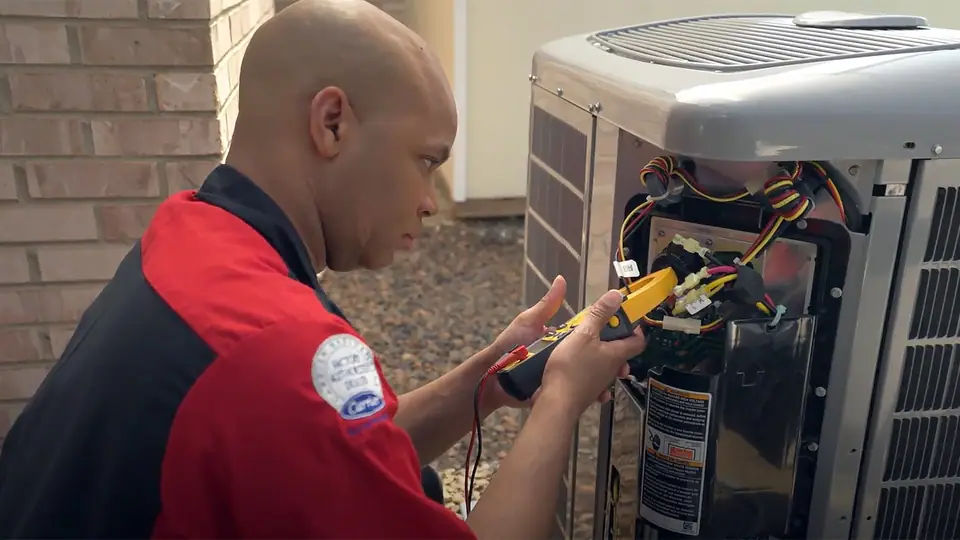
Not all tune-ups are created equal. A thorough professional maintenance visit should go well beyond a quick visual inspection. Here’s what a comprehensive tune-up—like King’s 40-point AC tune-up—should cover:
- Check airflow and temperature
- Check air filter condition and advise on replacement if needed
- Clean condenser coil
- Check indoor evaporator coil
- Check refrigerant charge
- Clean drain system
- Test capacitors
- Inspect electrical connections and check voltage
- Check amp relays
- Adjust blower components
- Lubricate motors
- Calibrate thermostat
- Test operating pressures
- And more—40 points in total
Pro TipIf your technician never comes inside the home to check your thermostat or air returns, you’re probably not getting a comprehensive tune-up. Members of King’s Royal Treatment Plan receive a whole-system evaluation every year—not a checkbox exercise.
When to Schedule Your Tune-Up
Schedule your AC tune-up in early spring—March or April is ideal for the Chicago area. Getting on the schedule early ensures availability before the summer rush, and you want your system verified before the first hot weekend arrives.
How to Choose the Right HVAC Company
Your AC tune-up is only as good as the company performing it. Here’s what to look for when evaluating HVAC service providers in Chicagoland:
- Longevity: Companies with decades in business are generally more reputable. King has been serving Chicagoland since 1968.
- Reviews: Read recent customer reviews across Google, Yelp, and the BBB. Look for patterns around timeliness and communication.
- Certification: Look for NATE-certified technicians—the industry’s most recognized credential for HVAC professionals.
- Credentials: Factory-authorized dealer relationships with major brands like Carrier signal that a company meets rigorous installation and service standards.
- Ethics record: Awards like the BBB Torch Award for Ethics—which King has received—are a meaningful third-party signal of how a company treats its customers.
- Transparency: A reputable company gives you a clear scope of work before the visit—not a vague “we’ll look at it” promise.
- Price: Get a clear quote before committing. If a price seems unusually low, ask exactly what’s included—not all tune-ups cover the same scope.
Learn more about choosing the right AC company in Chicago.